
Stake attention in this memory
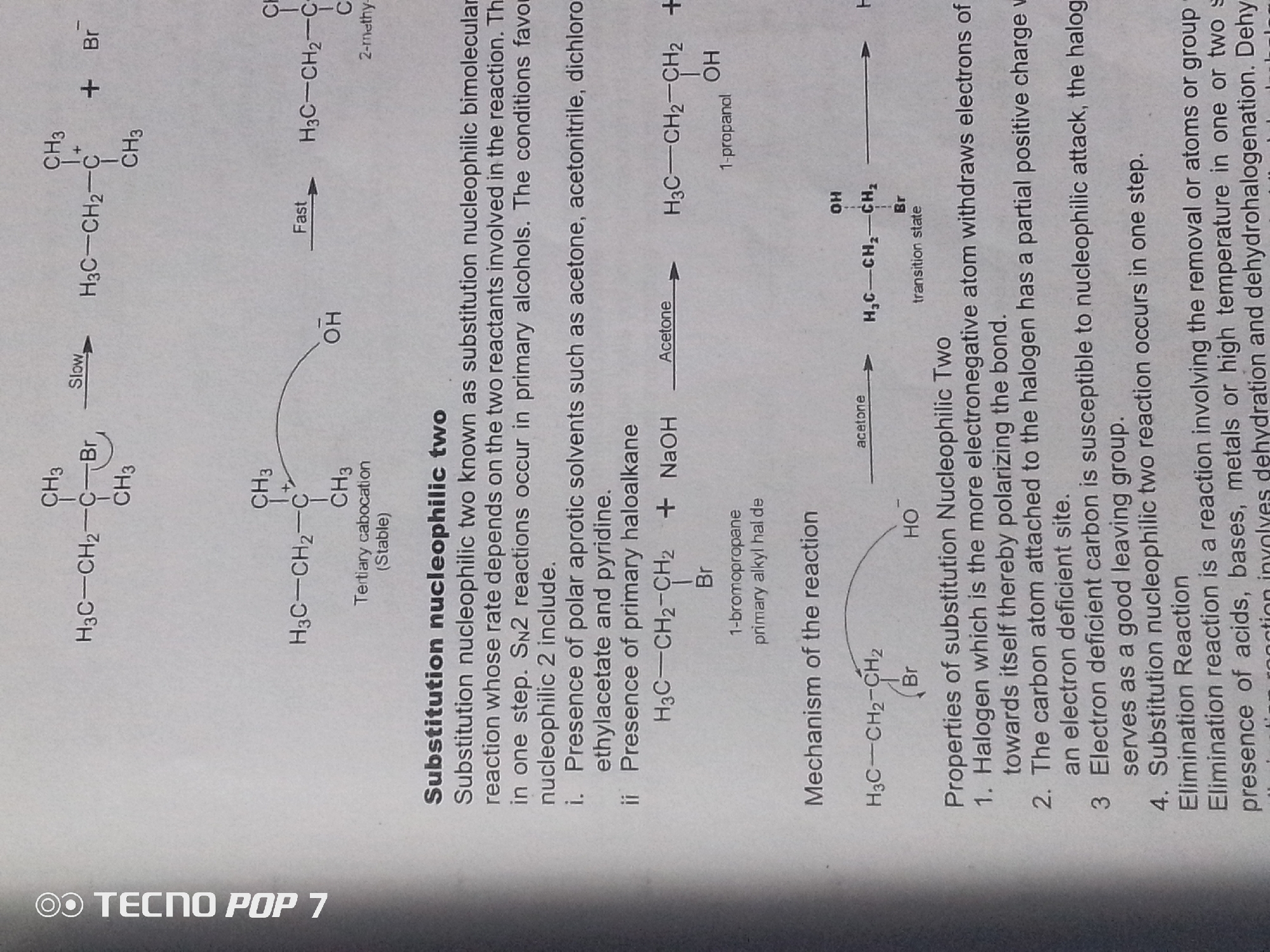
The image displays a chemical reaction mechanism diagram, specifically illustrating a substitution nucleophilic bimolecular (SN2) reaction. The diagram is divided into sections, showing the reactants, intermediates, and products. On the left side, the reaction starts with a tertiary carbocation and a bromide ion, indicating the first step of a reaction that proceeds slowly. This step is followed by a faster reaction involving a nucleophile. The central part of the image describes "Substitution nucleophilic two," explaining that the reaction rate depends on the concentration of both reactants and occurs in one step, characteristic of SN2 reactions. It lists conditions that favor SN2 reactions, including the presence of polar aprotic solvents like acetone and acetonitrile, and primary haloalkanes. An example of this reaction is shown with NaOH and a haloalkane, producing an alcohol and a bromide ion. The right side of the image, labeled "Mechanism of the reaction," details the SN2 mechanism itself. It shows the nucleophile (OH-) attacking the carbon atom bonded to the leaving group (Br-) from the backside, leading to the formation of a transition state. The text further elaborates on the properties of substitution nucleophilic reactions, highlighting the role of electronegativity, partial positive charge on the carbon atom, and the nature of the leaving group. It also contrasts substitution with elimination reactions. The overall image is a didactic illustration of chemical reaction pathways and principles. There are no elements suggestive of a specific geographical location like a city.
No transactions found