
Sign in
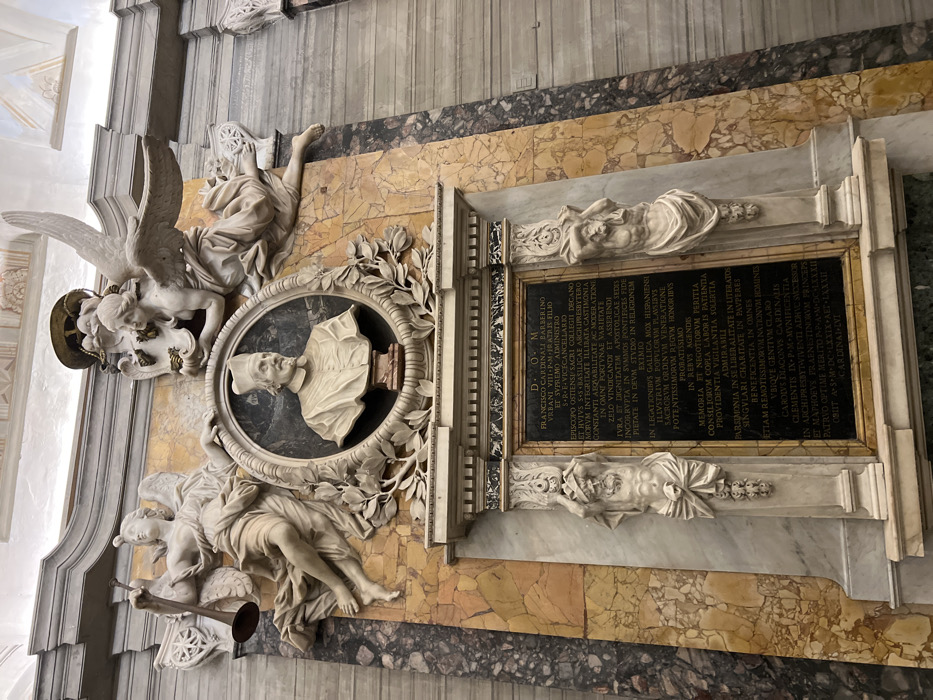
The image displays a highly ornate funerary monument or memorial, likely situated within a grand architectural space such as a church or cathedral. The monument is made primarily of various types of marble, featuring contrasting white, beige, and dark, veined stone. The overall composition is complex and rich in detail, characteristic of Baroque artistry.

At the center-left, a sculpted marble bust of a man is encased within a circular, elaborately carved frame adorned with foliage. The bust depicts a male figure wearing clerical attire, including a cassock and a biretta (a square cap). He has a distinguished appearance with a short beard and mustache. The frame around the bust appears to be gilded or made of a contrasting material in some areas, highlighting its intricate design.

Flanking the circular bust, and also positioned above and below it, are several allegorical or angelic marble figures.
Above the bust, to the left, a winged putto or angel is depicted, possibly holding a bishop's mitre or cardinal's hat on a cushion. Another reclining, draped female figure is partially visible directly above this angel, seemingly looking away from the bust.
Below the bust, to the left, another winged figure, likely an angel, is shown holding a long, ornate trumpet or horn. A draped, reclining figure is positioned just below the bust, further to the left, with parts of its legs visible.

To the right of the central bust is a large, rectangular black marble plaque bearing a detailed Latin inscription in white text. The plaque is framed by an architectural border of white marble.
Above this black plaque, a draped, reclining female figure is carved in white marble, resting on the upper frame of the inscription, gazing downwards. This figure appears to represent a classical ideal or virtue.
Below the black plaque, a similar, though perhaps more emaciated or skeletal, figure is carved in white marble, also resting on the lower frame of the inscription. This figure might symbolize mortality or the passage of time.

The monument is set against a wall with architectural elements, possibly fluted pilasters or columns, visible in the background, suggesting a grand interior. The overall impression is one of solemnity, honor, and artistic grandeur.

The visible text on the black plaque, transcribed from the image and OCR, reads:

"D.O.M.
FRANCISCO CARDINALI BARBERINO
VRBANI VIII P.M. FRATRIS FILIO
ET SVPREMO ADMINISTRO
S.R.E. VICECANCELLARIO
EPISCOPO OSTIENSI SACRI COLLEGII DECANO
ET HVIVS S.S. BASILICAE ARCHIPRESBYTERO
MORVM INTEGRITATE ILLIBATA CASTIMONIA
CONSTANTI ABOVABILITATE AC MODERATIONE
IN OMNI FORTUNAE VARIETATE
ZELO VINDICANDI ET ASSERENDI
IVRA ET DIGNITATEM APOSTOLICAE SEDIS
INCORRUPTA IN SVMMOS PONTIFICES FIDE
PIETATE IN DEVM STUDIO IN RELIGIONEM
EXIMIO
IN LEGATIONE GALLICA MOX HISPANIENSI
ILLVSTRIVM POPVLORVM PLAVSIBVS
SACRORVM ORDINUM VENERATIONE
POTENTISSIMORVM REGVM HONORIBVS
PROBATISSIMO
IN REBUS AGENDIS
MEMORIA ET NEGOTIORVM PERITIA
CONSILIORVM COPIA LABORIS PATIENTIA
PROVIDENTIA VIGILANTIA SOLERTIA
ADMIRABILI
PARSIMONIA IN SE LIBERALITATE IN LITERATOS
SINGVLARI CHARITATE IN PAVPERES
BENEFICENTIA IN OMNES
ETIAM REMOTISSIMORVM NATIONVM HOMINES
VBIQVE GENTIVM CLARO
CAROLVS DIACONVS CARDINALIS
CLEMENTIS IX P.M. MVNIFICENTIA
IN ARCHIPRESBYTERIVM VIVENTI ADHVC SVCCESSOR
ET MAPHOEVS PRAENESTINORVM PRINCEPS
PATRVO OPTIME MERITO P.P. A.M. DC LXXXII
OBIIT A.S. MDC LXXIX AET. LXXXI
CARDINAL. LVI"

This inscription is a dedication to Cardinal Francesco Barberini, nephew of Pope Urban VIII. It details his numerous high-ranking ecclesiastical positions, including Vice-Chancellor of the Holy Roman Church, Bishop of Ostia, Dean of the Sacred College, and Archpriest of St. Peter's Basilica. It praises his moral integrity, chastity, constancy, moderation, zeal for the Apostolic See, piety, and religious devotion. The text also mentions his diplomatic missions to France and Spain, his skills in business, memory, counsel, patience, foresight, and vigilance. His virtues, such as frugality, generosity towards the learned, charity for the poor, and beneficence to all, are highlighted. The monument was erected by Cardinal Carlo Barberini and Maffeo Barberini (his nephews), who were alive in 1682 when the monument was likely finished or dedicated. It states that Cardinal Francesco Barberini died in the year 1679 at the age of 81, having been a cardinal for 56 years.
FM-nv0sw2

Nov 15, 2024

Vatican City, Vatican City

Stake attention in this memory

The image displays a highly ornate funerary monument or memorial, likely situated within a grand architectural space such as a church or cathedral. The monument is made primarily of various types of marble, featuring contrasting white, beige, and dark, veined stone. The overall composition is complex and rich in detail, characteristic of Baroque artistry. At the center-left, a sculpted marble bust of a man is encased within a circular, elaborately carved frame adorned with foliage. The bust depicts a male figure wearing clerical attire, including a cassock and a biretta (a square cap). He has a distinguished appearance with a short beard and mustache. The frame around the bust appears to be gilded or made of a contrasting material in some areas, highlighting its intricate design. Flanking the circular bust, and also positioned above and below it, are several allegorical or angelic marble figures. Above the bust, to the left, a winged putto or angel is depicted, possibly holding a bishop's mitre or cardinal's hat on a cushion. Another reclining, draped female figure is partially visible directly above this angel, seemingly looking away from the bust. Below the bust, to the left, another winged figure, likely an angel, is shown holding a long, ornate trumpet or horn. A draped, reclining figure is positioned just below the bust, further to the left, with parts of its legs visible. To the right of the central bust is a large, rectangular black marble plaque bearing a detailed Latin inscription in white text. The plaque is framed by an architectural border of white marble. Above this black plaque, a draped, reclining female figure is carved in white marble, resting on the upper frame of the inscription, gazing downwards. This figure appears to represent a classical ideal or virtue. Below the black plaque, a similar, though perhaps more emaciated or skeletal, figure is carved in white marble, also resting on the lower frame of the inscription. This figure might symbolize mortality or the passage of time. The monument is set against a wall with architectural elements, possibly fluted pilasters or columns, visible in the background, suggesting a grand interior. The overall impression is one of solemnity, honor, and artistic grandeur. The visible text on the black plaque, transcribed from the image and OCR, reads: "D.O.M. FRANCISCO CARDINALI BARBERINO VRBANI VIII P.M. FRATRIS FILIO ET SVPREMO ADMINISTRO S.R.E. VICECANCELLARIO EPISCOPO OSTIENSI SACRI COLLEGII DECANO ET HVIVS S.S. BASILICAE ARCHIPRESBYTERO MORVM INTEGRITATE ILLIBATA CASTIMONIA CONSTANTI ABOVABILITATE AC MODERATIONE IN OMNI FORTUNAE VARIETATE ZELO VINDICANDI ET ASSERENDI IVRA ET DIGNITATEM APOSTOLICAE SEDIS INCORRUPTA IN SVMMOS PONTIFICES FIDE PIETATE IN DEVM STUDIO IN RELIGIONEM EXIMIO IN LEGATIONE GALLICA MOX HISPANIENSI ILLVSTRIVM POPVLORVM PLAVSIBVS SACRORVM ORDINUM VENERATIONE POTENTISSIMORVM REGVM HONORIBVS PROBATISSIMO IN REBUS AGENDIS MEMORIA ET NEGOTIORVM PERITIA CONSILIORVM COPIA LABORIS PATIENTIA PROVIDENTIA VIGILANTIA SOLERTIA ADMIRABILI PARSIMONIA IN SE LIBERALITATE IN LITERATOS SINGVLARI CHARITATE IN PAVPERES BENEFICENTIA IN OMNES ETIAM REMOTISSIMORVM NATIONVM HOMINES VBIQVE GENTIVM CLARO CAROLVS DIACONVS CARDINALIS CLEMENTIS IX P.M. MVNIFICENTIA IN ARCHIPRESBYTERIVM VIVENTI ADHVC SVCCESSOR ET MAPHOEVS PRAENESTINORVM PRINCEPS PATRVO OPTIME MERITO P.P. A.M. DC LXXXII OBIIT A.S. MDC LXXIX AET. LXXXI CARDINAL. LVI" This inscription is a dedication to Cardinal Francesco Barberini, nephew of Pope Urban VIII. It details his numerous high-ranking ecclesiastical positions, including Vice-Chancellor of the Holy Roman Church, Bishop of Ostia, Dean of the Sacred College, and Archpriest of St. Peter's Basilica. It praises his moral integrity, chastity, constancy, moderation, zeal for the Apostolic See, piety, and religious devotion. The text also mentions his diplomatic missions to France and Spain, his skills in business, memory, counsel, patience, foresight, and vigilance. His virtues, such as frugality, generosity towards the learned, charity for the poor, and beneficence to all, are highlighted. The monument was erected by Cardinal Carlo Barberini and Maffeo Barberini (his nephews), who were alive in 1682 when the monument was likely finished or dedicated. It states that Cardinal Francesco Barberini died in the year 1679 at the age of 81, having been a cardinal for 56 years.

transactions
revenues
stakers
Earliest
Latest
Highest stake

No transactions found

More from this user

More from Vatican City

FM-nv0sw2

Nov 15, 2024

Vatican City, Vatican City

Licensed under Creative Commons Attribution 4.0 International License. You are free to share and adapt this content with proper attribution.