The Transit Line That Threads Through a Residential High-Rise

Thursday, July 9, 2026 · Updated Thursday, July 9, 2026
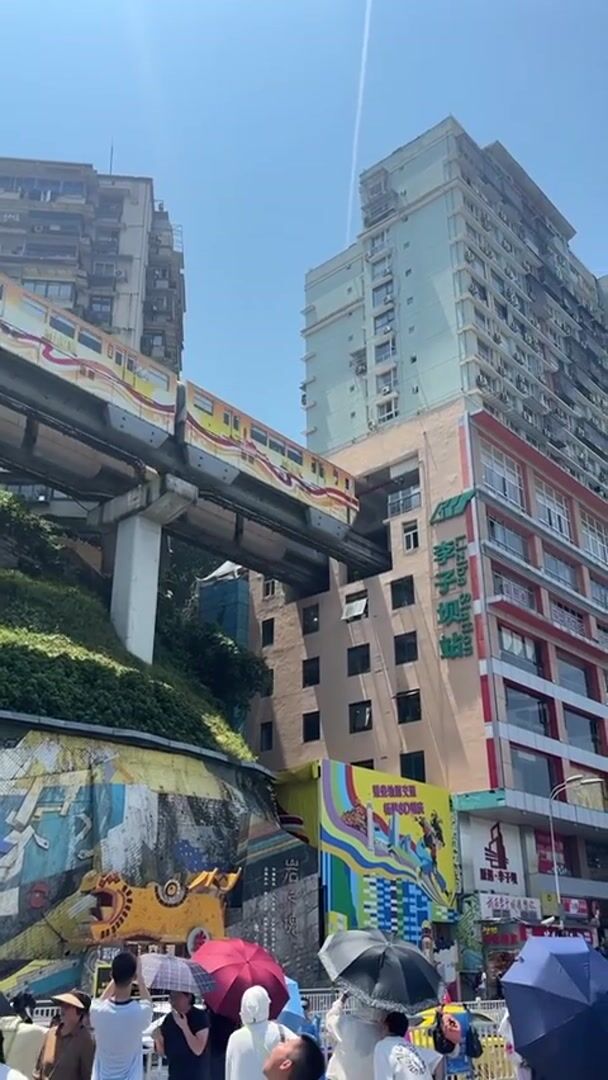
Chongqing has earned a reputation for its complex, multi-layered topography, where roads and railways navigate steep hillsides and dense vertical developments. Among its most celebrated urban marvels is Liziba Station, where the transit network and residential architecture merge into a single structure.
The monorail line runs directly through the middle of a nineteen-story residential building, occupying the sixth through eighth floors. This design was born out of necessity, allowing the city to expand its transit system without demolishing existing housing or compromising on route efficiency.
Specialized noise-reduction technology and vibration dampeners ensure that the daily flow of trains remains virtually imperceptible to the residents living above and below the tracks. The quiet glide of the yellow and red carriages has turned a practical transit solution into a global design icon.
Down on the street, visitors gather to watch the train disappear into the facade, a testament to how creative engineering can resolve the spatial challenges of modern megacities. It is a seamless blend of infrastructure and daily life.
A yellow and red monorail train travels on an elevated track that passes through a building. The building has many windows and signs, some with Chinese characters. A mural is visible on a hillside to the left of the building. Several people are standing on the street below, holding umbrellas. The sky is blue and clear, suggesting it is a sunny day.