Friday, April 24, 2026 · Updated Friday, April 24, 2026
Milan, Italy
In the heart of Milan, a pilgrimage site for art enthusiasts awaits: the Santa Maria delle Grazie, home to Leonardo da Vinci's monumental fresco, "The Last Supper." Visitors gather in the grand, high-ceilinged hall, their hushed anticipation palpable as they approach the iconic mural spanning the entire far wall.
The image displays a full view of Leonardo da Vinci's iconic mural, "The Last Supper," situated on a wall within what appears to be its historical setting in Milan, Italy. The lighting is dim, highlighting the mural itself.
The painting depicts Jesus Christ and his twelve disciples gathered at a long table for their final meal. Jesus is centrally positioned with his arms outstretched, appearing calm amidst the agitated reactions of his disciples. The disciples are arranged in groups of three on either side of Jesus, each conveying distinct emotions—shock, dismay, anger, or inquiry—through their gestures and facial expressions, illustrating the dramatic moment Jesus reveals one will betray him. The table is laden with simple fare, including bread and plates. The background of the mural features a coffered ceiling, receding walls, and three windows that open onto a distant, hazy blue landscape with mountains, adding depth to the scene.
Above the mural, the architectural elements of the room are visible: vaulted arches adorned with painted coats of arms and decorative motifs. Fragments of text, such as "LV," "BL," "SI," and "DV S," are faintly discernible on these arches, likely parts of heraldic inscriptions. Below the painting, the wall is plainer, showing some texture and an archway opening in the lower center. At the bottom of the photograph, out-of-focus information panels or plaques are visible, typical of a museum or heritage site.
The mural itself shows considerable signs of age, including fading, flaking paint, and areas of past restoration, particularly noticeable in the lower sections and parts of the figures. The overall impression is of a monumental and deeply expressive work of art, preserved and displayed in its original, revered location.
The painting, depicting Jesus Christ and his twelve disciples during their final meal, is a masterpiece of human emotion and dramatic composition. Jesus, centrally positioned with outstretched arms, remains calm amidst the agitated reactions of his disciples, each conveying distinct emotions—shock, dismay, anger, or inquiry—through their gestures and facial expressions. The table, laden with simple fare, and the background's receding walls and distant landscape add depth to the profound scene.
An interior view captures a large, historical fresco depicting the Crucifixion of Christ, spanning much of a wall within an arched architectural space, likely in Milan, Italy. The fresco is divided into three main sections by arches, with Christ crucified centrally, flanked by two other figures on crosses. Below them, a crowded scene unfolds with numerous figures, including Roman soldiers on horseback, women in flowing robes, and individuals kneeling in solemn contemplation or prayer. The artwork features a muted color palette and shows signs of age, with visible damage and fading in several areas, particularly along its lower and lateral edges.
In the foreground, two women are present. One, with long dark hair, is seated on a dark wooden bench with her back to the camera, seemingly observing the fresco. Another woman, wearing a dark patterned dress, walks away from the viewer, moving towards the right side of the frame. Several other dark benches are arranged in rows on the dark-tiled floor, indicating a viewing area. A long, dark display case or barrier runs along the bottom of the wall, beneath the fresco.
The architectural setting features light-colored arched ceilings and walls, with subtle decorative patterns visible in the archways and on the right-hand wall. Notable visible text within the fresco includes "INRI" at the top of Christ's cross and "SPQR" on a red banner held by a figure below the central cross. The scene conveys a sense of quiet reverence, typical of a museum, gallery, or church setting for appreciating religious art.
The architectural setting itself is steeped in history, with elegant vaulted white ceilings and supporting arches. Above the mural, the wall features decorative painted arches and heraldic crests, hinting at centuries of legacy. The fresco, however, bears the marks of time, with visible signs of age, fading, and past restoration, particularly in its lower sections, a testament to its enduring journey through history.
A medium green square contains the hashtag "#FreakyFriday" in white, centered horizontally and vertically.
Beyond "The Last Supper," other historical frescoes, such as a large depiction of the Crucifixion, grace the adjacent walls, further immersing visitors in the rich artistic heritage. Tourists, casually dressed, move through the space, observing in quiet reverence, illuminated by both natural sunlight streaming through windows and the subtle glow of artificial lighting. It is a moment of profound connection with art and history, a testament to Milan's enduring cultural significance.
The image displays the interior of a large, high-ceilinged hall, likely a historic refectory in Milan, Italy. The central subject is a grand mural painting of "The Last Supper" spanning the entire far wall of the room. Above the mural, the wall features decorative painted arches and what appear to be heraldic crests or emblems, adding to the historical ambiance.
The architecture is characterized by elegant vaulted white ceilings and supporting arches. The side walls are adorned with intricate painted patterns and designs, and two tall, narrow windows with brick-like frames are visible on the left. The floor is dark and reflective, possibly made of stone or polished wood.
Numerous people, who appear to be tourists or visitors, are gathered in the hall. They are casually dressed and are engaged in observing the famous mural, walking through the space, and conversing. Their presence suggests an ongoing visit to a cultural or historical site.
The room is illuminated by both natural and artificial light. A prominent rectangular patch of bright sunlight falls on the dark floor on the right side, indicating it is daytime. Additional illumination comes from vertical light stands positioned against the walls. The overall atmosphere appears to be one of quiet observation and appreciation for the significant artwork and its historical setting. No visible text is discernible within the image.
The image displays a full view of Leonardo da Vinci's iconic mural, "The Last Supper," situated on a wall within what appears to be its historical setting in Milan, Italy. The lighting is dim, highlighting the mural itself.
The painting depicts Jesus Christ and his twelve disciples gathered at a long table for their final meal. Jesus is centrally positioned with his arms outstretched, appearing calm amidst the agitated reactions of his disciples. The disciples are arranged in groups of three on either side of Jesus, each conveying distinct emotions—shock, dismay, anger, or inquiry—through their gestures and facial expressions, illustrating the dramatic moment Jesus reveals one will betray him. The table is laden with simple fare, including bread and plates. The background of the mural features a coffered ceiling, receding walls, and three windows that open onto a distant, hazy blue landscape with mountains, adding depth to the scene.
Above the mural, the architectural elements of the room are visible: vaulted arches adorned with painted coats of arms and decorative motifs. Fragments of text, such as "LV," "BL," "SI," and "DV S," are faintly discernible on these arches, likely parts of heraldic inscriptions. Below the painting, the wall is plainer, showing some texture and an archway opening in the lower center. At the bottom of the photograph, out-of-focus information panels or plaques are visible, typical of a museum or heritage site.
The mural itself shows considerable signs of age, including fading, flaking paint, and areas of past restoration, particularly noticeable in the lower sections and parts of the figures. The overall impression is of a monumental and deeply expressive work of art, preserved and displayed in its original, revered location.
An interior view captures a large, historical fresco depicting the Crucifixion of Christ, spanning much of a wall within an arched architectural space, likely in Milan, Italy. The fresco is divided into three main sections by arches, with Christ crucified centrally, flanked by two other figures on crosses. Below them, a crowded scene unfolds with numerous figures, including Roman soldiers on horseback, women in flowing robes, and individuals kneeling in solemn contemplation or prayer. The artwork features a muted color palette and shows signs of age, with visible damage and fading in several areas, particularly along its lower and lateral edges.
In the foreground, two women are present. One, with long dark hair, is seated on a dark wooden bench with her back to the camera, seemingly observing the fresco. Another woman, wearing a dark patterned dress, walks away from the viewer, moving towards the right side of the frame. Several other dark benches are arranged in rows on the dark-tiled floor, indicating a viewing area. A long, dark display case or barrier runs along the bottom of the wall, beneath the fresco.
The architectural setting features light-colored arched ceilings and walls, with subtle decorative patterns visible in the archways and on the right-hand wall. Notable visible text within the fresco includes "INRI" at the top of Christ's cross and "SPQR" on a red banner held by a figure below the central cross. The scene conveys a sense of quiet reverence, typical of a museum, gallery, or church setting for appreciating religious art.
A medium green square contains the hashtag "#FreakyFriday" in white, centered horizontally and vertically.
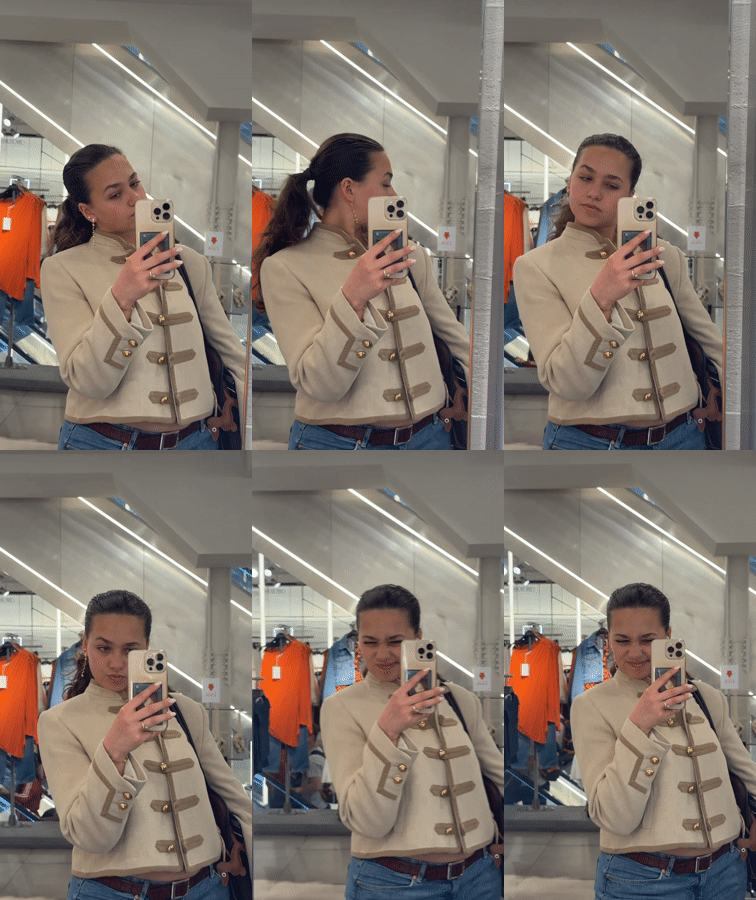
Woman creates elaborate selfie session in Milan early morning


 Milan, Italy