HfM07SISWjOIefQLNZ8qwKKaBdn2

Mihail Nedev

Creator

Fri, Apr 17, 2026, 01:55 PM

11h ago

Città del Vaticano, Vatican City

41.90200, 12.45400

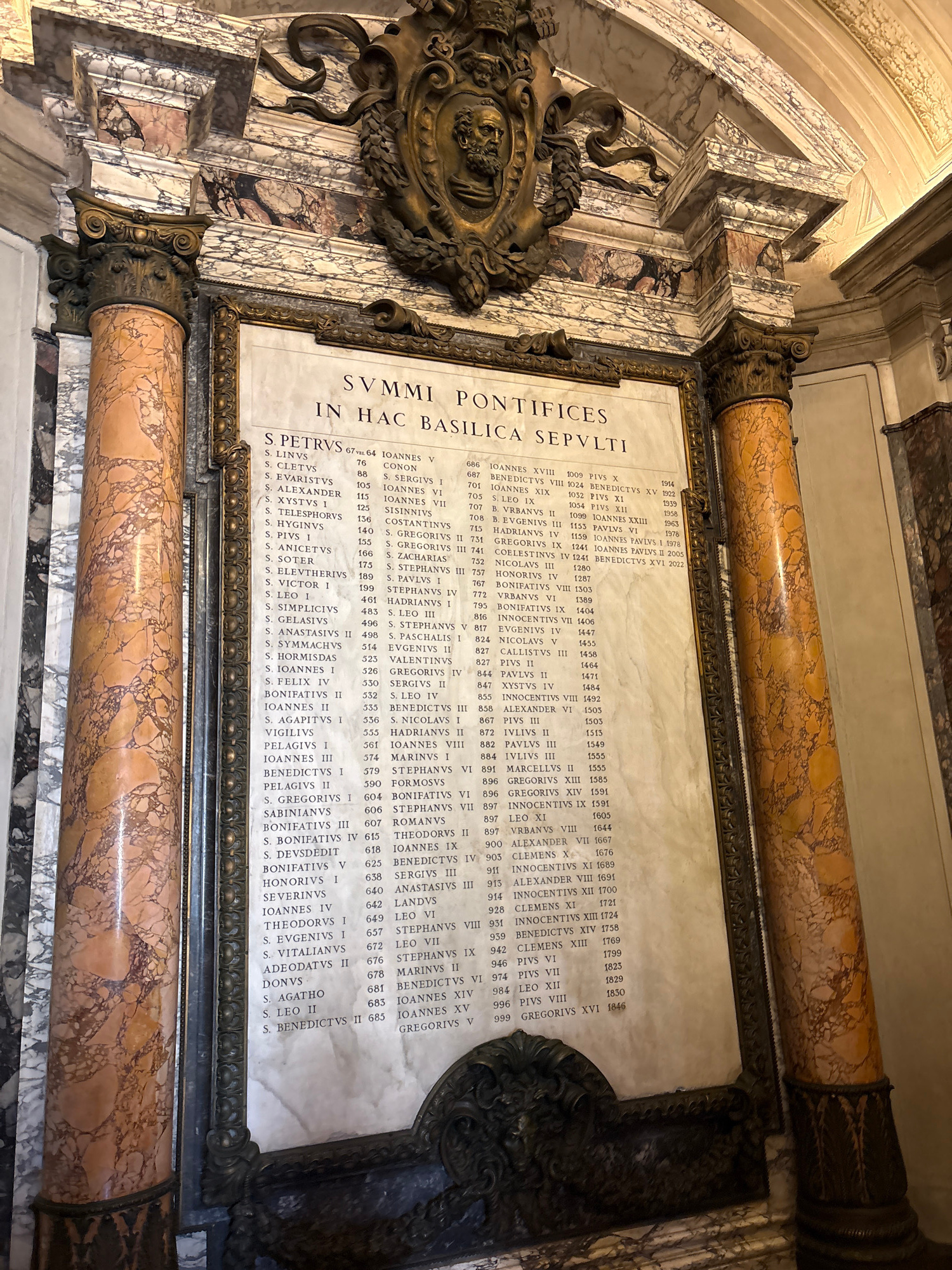
This image showcases an opulent interior architectural detail, likely within a grand basilica or cathedral in Vatican City. The central feature is a large, rectangular marble plaque inscribed with a l…read more

[object Object]
[object Object]
[object Object]
[object Object]
[object Object]

Technical

ID

0b8208bc-da40-4e60-b

Usage Rights

This media is free for non-commercial use with proper attribution.

Commercial use, AI/ML training, and derivative works are prohibited without explicit consent from the creator.

Licensed under CC BY-NC 4.0 with additional AI/ML restrictions. Full terms →

This image showcases an opulent interior architectural detail, likely within a grand basilica or cathedral in Vatican City. The central feature is a large, rectangular marble plaque inscribed with a list titled "SVMMI PONTIFICES IN HAC BASILICA SEPVLTI," which translates to "Supreme Pontiffs Buried in This Basilica." This text confirms the plaque serves as a memorial or historical record of popes interred at the site. The list begins with "S. PETRUS 67 VEL 64" (Saint Peter 67 or 64) and continues chronologically through the centuries. Notable names include S. Linus, S. Clemens, S. Leo, S. Gregorius, Ioannes, Pius, Benedictus, and Paulus. The latest visible entries are "BENEDICTUS XVI 2022," "IOANNES PAVLVS II 2005," "IOANNES PAVLVS I 1978," "PAVLVS VI 1978," "IOANNES XXIII 1958," "PIVS XII 1939," "PIVS XI 1922," and "PIVS X 1914." Each name is accompanied by a year. The plaque is framed by an elaborate, dark metallic, possibly bronze, border adorned with intricate reliefs. Flanking the plaque are two substantial, ornate columns made of richly veined brown and cream marble, complete with classical capitals and bases. To the left, a large, decorative bronze crest or coat of arms is mounted on the wall. The surrounding walls and ceiling feature intricately carved marble, displaying complex mouldings and patterns in white and grey veining. The scene conveys a sense of historical reverence and ecclesiastical artistry, typical of a significant religious landmark. No people are visible, and no specific event is taking place; the image is a static capture of this elaborate monument. | Open Wire