Sign in
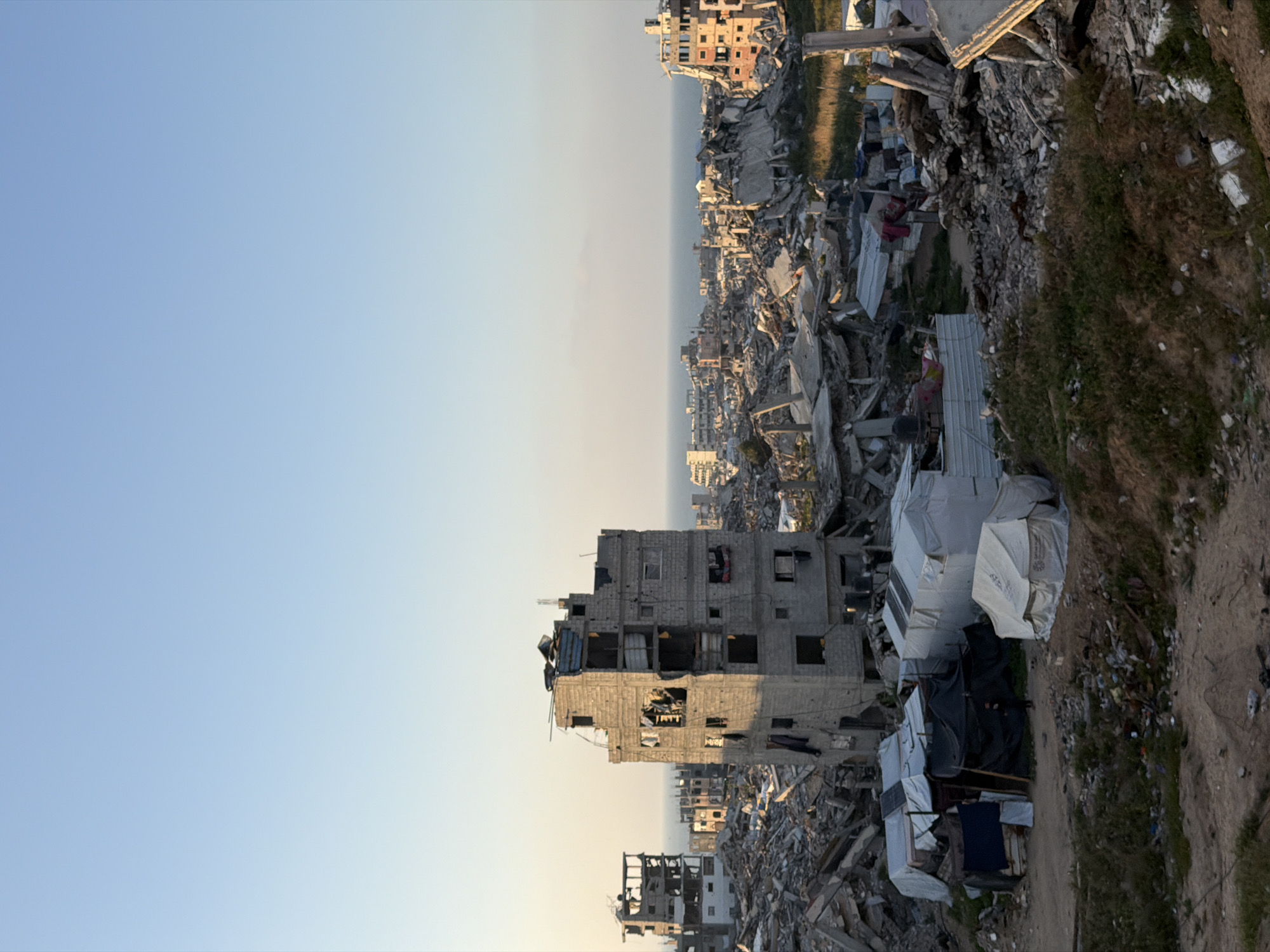
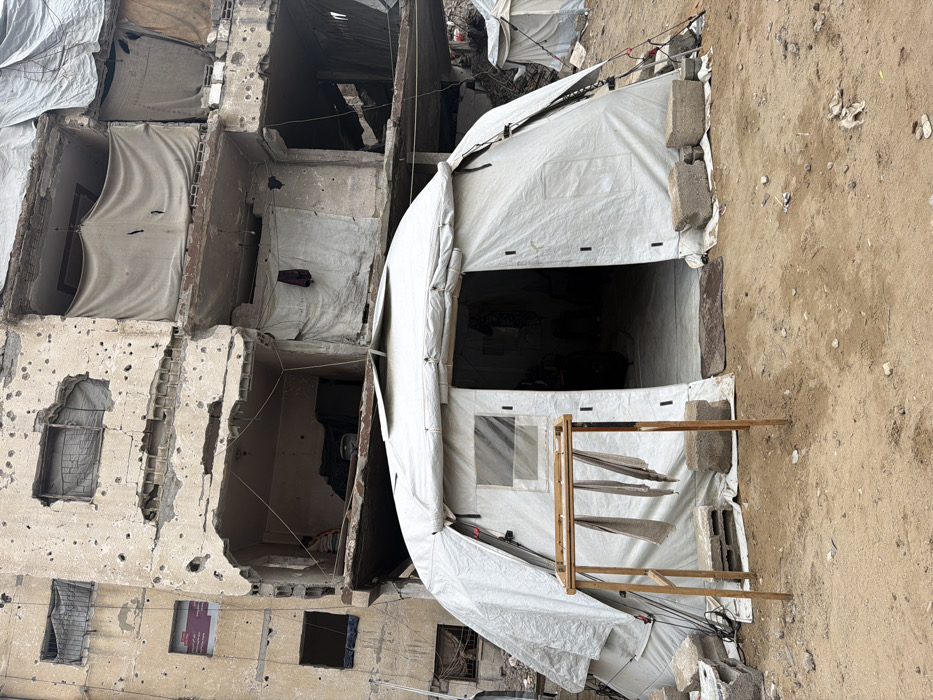
The image presents a somber scene dominated by a severely damaged multi-story concrete building juxtaposed with a large, white temporary tent. The setting appears to be an area affected by conflict or disaster.

The building, occupying the left side of the frame, is in a state of ruin. Large sections of its walls are missing, exposing the interiors of multiple rooms across several floors. The concrete exterior is pockmarked with countless small holes, indicative of bullet or shrapnel impacts. Many window openings are empty frames, while others show remnants of broken grates. On the upper floors, some exposed room interiors are partially covered with light-colored tarpaulins or sheets, serving as makeshift walls or privacy screens. The interiors visible through the gaps are dark and appear to be either empty or in deep shadow. On the lower section of the building, faded posters or signs with indecipherable text are barely visible on the damaged wall.

Adjacent to the ruined building, in the central and right portions of the image, stands a large, white, canvas-like tent. The tent appears sturdy, supported by an internal frame, and its material is heavy-duty. An open entrance faces the viewer, revealing a dark interior. A rectangular clear plastic or mesh window is visible on the side of the tent. Along its base, concrete blocks are used to secure the tent to the ground, suggesting a degree of permanence for this temporary shelter.

To the right of the tent, the ground is bare, dry, light-brown earth or sand, scattered with small stones and debris. In the immediate foreground, a simple, light-colored wooden frame structure, resembling a drying rack or makeshift shelving, is positioned in front of the tent's window. Several pieces of light-colored fabric or material are draped over its horizontal bars. Some cables or wires are visible on the ground near the base of the tent.

The lighting suggests it is daytime, but there are no strong shadows or direct sunlight to indicate a specific time of day. The overall atmosphere is one of desolation, resilience, and humanitarian need, portraying temporary living arrangements in a severely damaged environment. No individuals are visible in the image.
HASAN

Feb 19, 2026

Jabalia, Palestinian Territory

Stake attention in this memory

Despair
Loss
Resilience
Insecurity
Hope

The image presents a somber scene dominated by a severely damaged multi-story concrete building juxtaposed with a large, white temporary tent. The setting appears to be an area affected by conflict or disaster. The building, occupying the left side of the frame, is in a state of ruin. Large sections of its walls are missing, exposing the interiors of multiple rooms across several floors. The concrete exterior is pockmarked with countless small holes, indicative of bullet or shrapnel impacts. Many window openings are empty frames, while others show remnants of broken grates. On the upper floors, some exposed room interiors are partially covered with light-colored tarpaulins or sheets, serving as makeshift walls or privacy screens. The interiors visible through the gaps are dark and appear to be either empty or in deep shadow. On the lower section of the building, faded posters or signs with indecipherable text are barely visible on the damaged wall. Adjacent to the ruined building, in the central and right portions of the image, stands a large, white, canvas-like tent. The tent appears sturdy, supported by an internal frame, and its material is heavy-duty. An open entrance faces the viewer, revealing a dark interior. A rectangular clear plastic or mesh window is visible on the side of the tent. Along its base, concrete blocks are used to secure the tent to the ground, suggesting a degree of permanence for this temporary shelter. To the right of the tent, the ground is bare, dry, light-brown earth or sand, scattered with small stones and debris. In the immediate foreground, a simple, light-colored wooden frame structure, resembling a drying rack or makeshift shelving, is positioned in front of the tent's window. Several pieces of light-colored fabric or material are draped over its horizontal bars. Some cables or wires are visible on the ground near the base of the tent. The lighting suggests it is daytime, but there are no strong shadows or direct sunlight to indicate a specific time of day. The overall atmosphere is one of desolation, resilience, and humanitarian need, portraying temporary living arrangements in a severely damaged environment. No individuals are visible in the image.

transactions
revenues
stakers
Earliest
Latest
Highest stake

No transactions found

More from this user

More from Jabalia

HASAN

Feb 19, 2026

Jabalia, Palestinian Territory

Licensed under Creative Commons Attribution 4.0 International License. You are free to share and adapt this content with proper attribution.