
Sign in
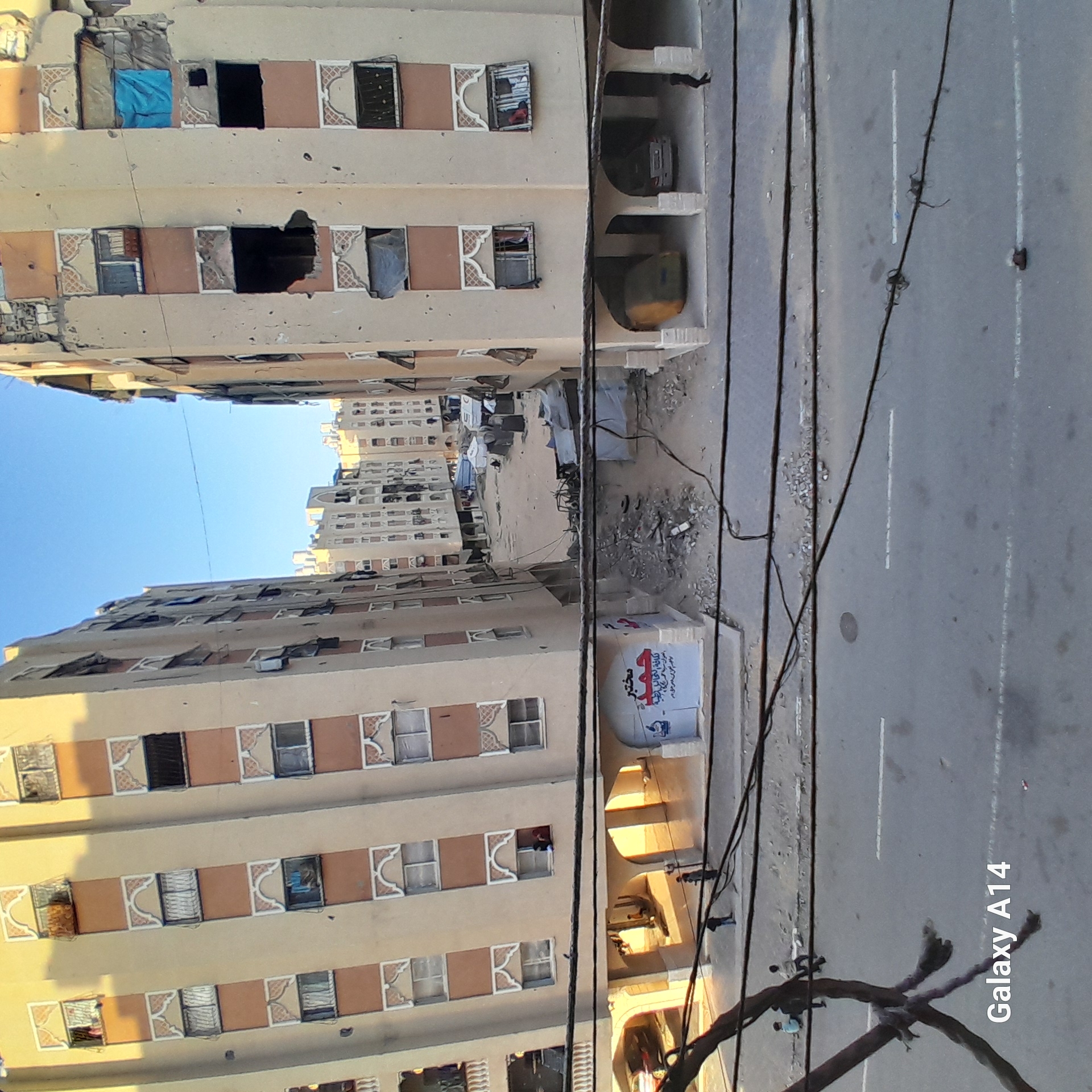
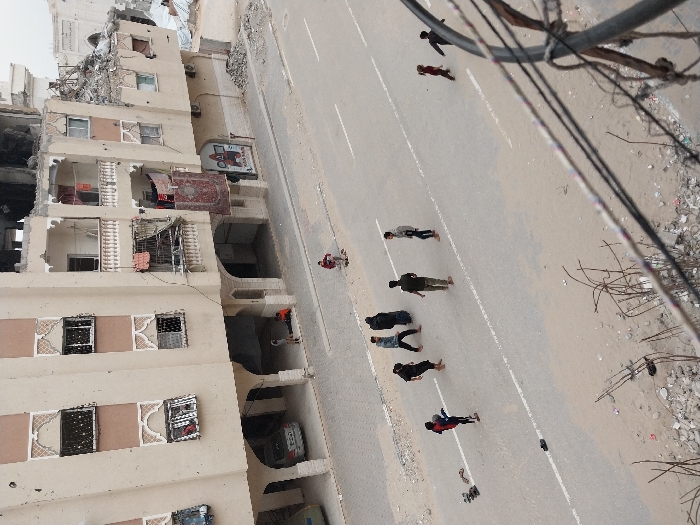
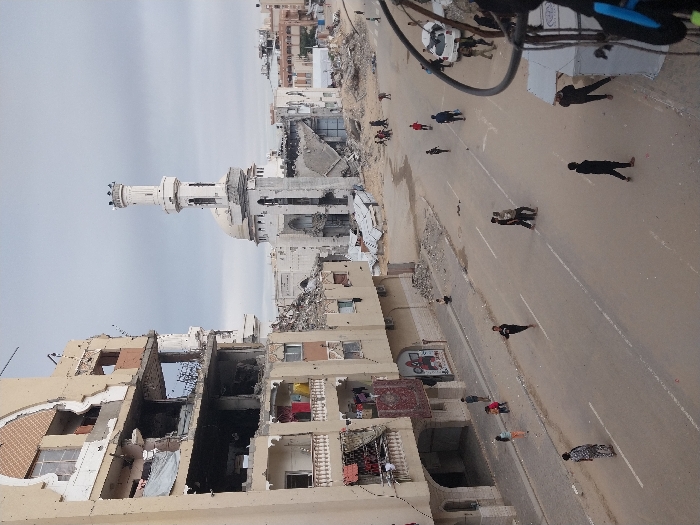
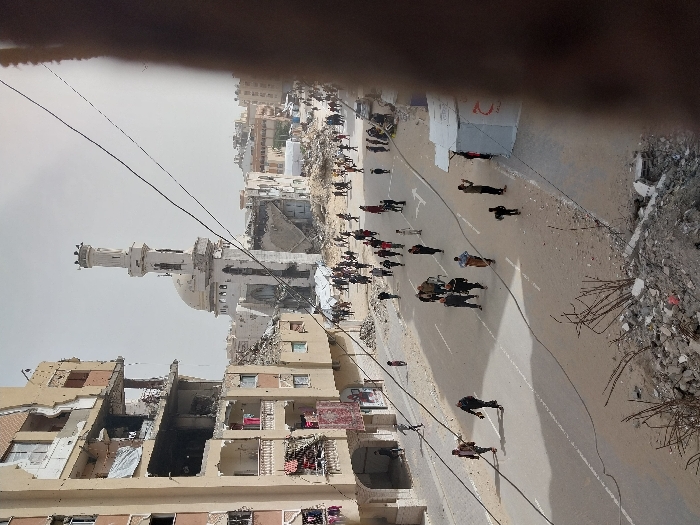
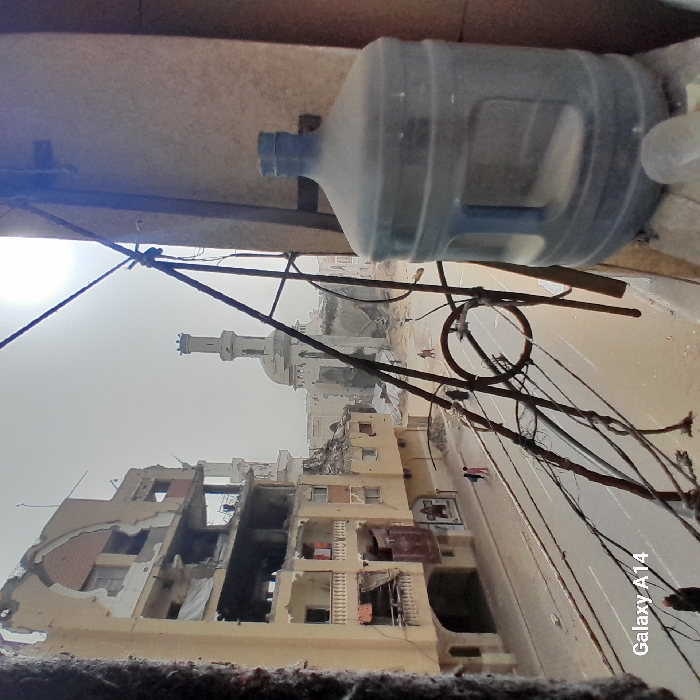
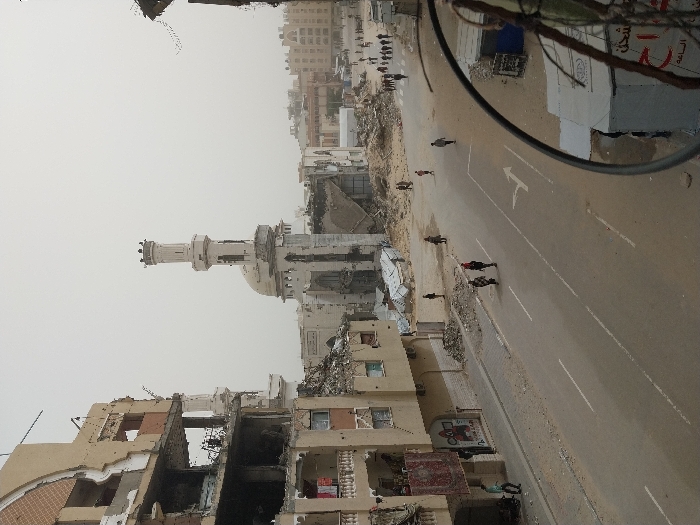
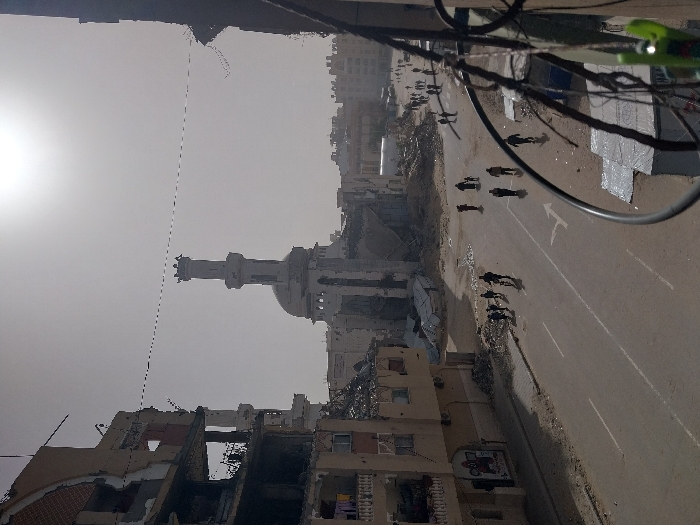
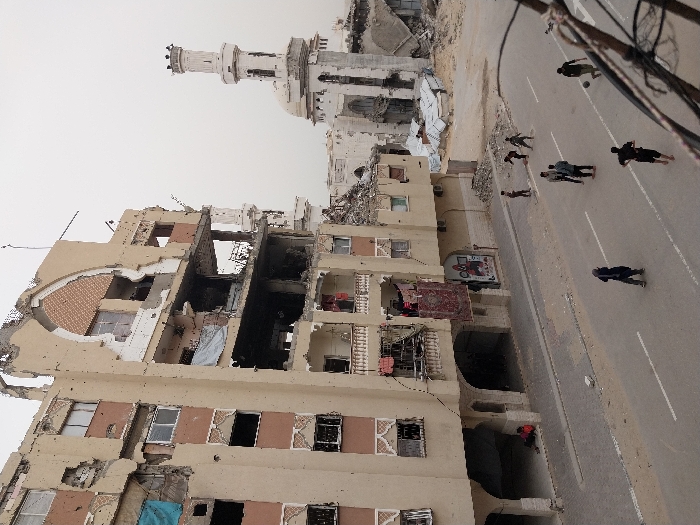
The image depicts a scene of extensive urban devastation, with heavily damaged buildings and debris, and several people walking on a paved road. The overall impression is one of aftermath, likely from conflict or a major disaster, under an overcast sky.

In the foreground and dominating the left side of the frame is a multi-story building, severely compromised. Large sections of its upper and middle floors are blown out or collapsed, revealing the internal structure, including exposed concrete slabs and twisted rebar. Walls are pockmarked with holes, and windows are either shattered or entirely missing. Despite the heavy damage, some details of former life remain, such as a distinctive red patterned rug hanging over a balcony railing on one of the lower, more intact sections, and what appears to be a blue tarp or fabric visible within a damaged interior space. The building's facade is a light beige or sand color, with reddish-brown decorative panels around some windows.

Further back and to the right of this prominent building, more rubble and the remains of other structures are visible, suggesting widespread destruction. In the background, a white or light-colored mosque minaret stands tall, its distinct cap and upper sections visible above the surrounding destruction. While the minaret itself appears somewhat intact, the structures immediately around it are clearly in ruins.

A wide, paved road runs from the foreground towards the background, slightly curving to the left. White lane markings are visible on its dark asphalt surface. Scattered debris and dust are present along the sides of the road. Several dark, thin wires, possibly power or communication lines, sag or hang loosely above the right side of the road.

Approximately six to eight individuals, appearing to be adult males, are walking or standing on the road. They are dressed in casual, dark-colored clothing. Their postures suggest they are engaged in daily movement, seemingly navigating the destroyed environment. Their faces are not clearly discernible due to distance.

The sky is uniformly light grey and overcast, providing diffuse lighting with no strong shadows, which could indicate a cloudy day or a dusty, hazy atmosphere. The architectural style, particularly the mosque minaret and the building designs, suggests a location in the Middle East or North Africa.

On a lower section of the heavily damaged building near the road, there is a visible sign or poster. It appears faded or damaged, making any text or specific imagery unreadable, though there seems to be a dark graphic or faded picture of a face or figure on it.
reham

Feb 13, 2026, 2:33 PM

Khan Yunis, Palestinian Territory

Stake attention in this memory

war-torn
destruction
Gaza
rubble
civilians

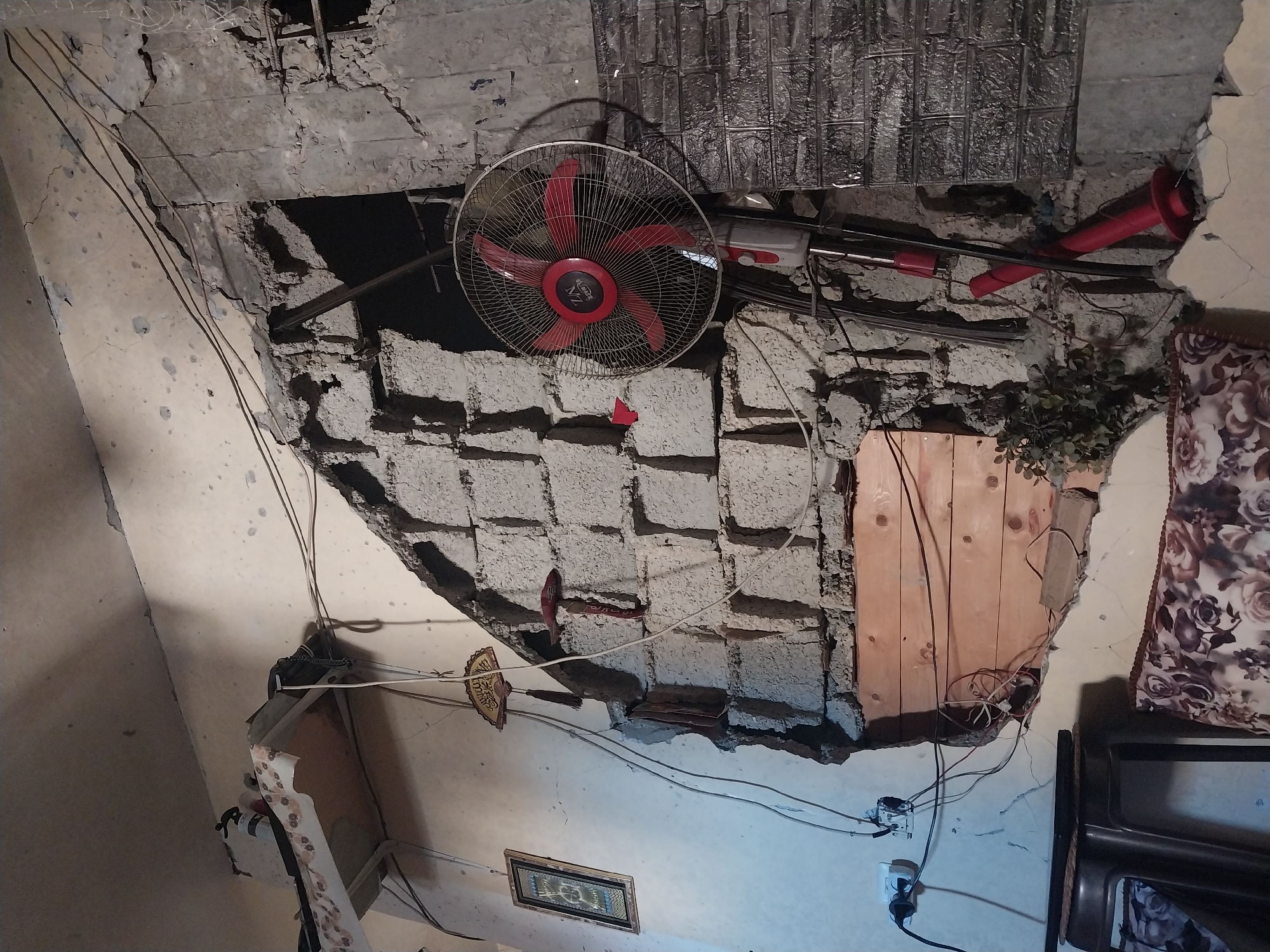
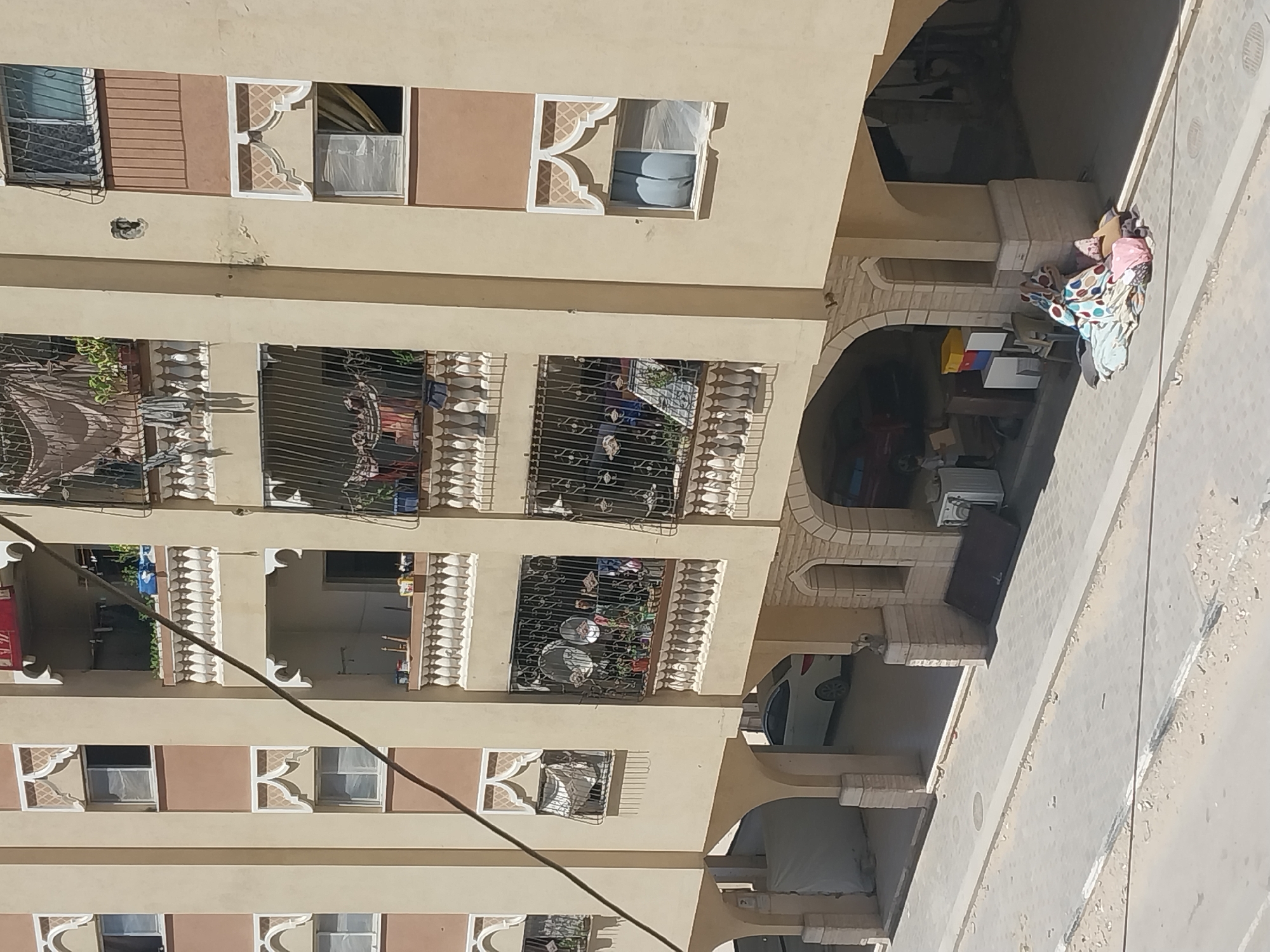
The image depicts a scene of extensive urban devastation, with heavily damaged buildings and debris, and several people walking on a paved road. The overall impression is one of aftermath, likely from conflict or a major disaster, under an overcast sky. In the foreground and dominating the left side of the frame is a multi-story building, severely compromised. Large sections of its upper and middle floors are blown out or collapsed, revealing the internal structure, including exposed concrete slabs and twisted rebar. Walls are pockmarked with holes, and windows are either shattered or entirely missing. Despite the heavy damage, some details of former life remain, such as a distinctive red patterned rug hanging over a balcony railing on one of the lower, more intact sections, and what appears to be a blue tarp or fabric visible within a damaged interior space. The building's facade is a light beige or sand color, with reddish-brown decorative panels around some windows. Further back and to the right of this prominent building, more rubble and the remains of other structures are visible, suggesting widespread destruction. In the background, a white or light-colored mosque minaret stands tall, its distinct cap and upper sections visible above the surrounding destruction. While the minaret itself appears somewhat intact, the structures immediately around it are clearly in ruins. A wide, paved road runs from the foreground towards the background, slightly curving to the left. White lane markings are visible on its dark asphalt surface. Scattered debris and dust are present along the sides of the road. Several dark, thin wires, possibly power or communication lines, sag or hang loosely above the right side of the road. Approximately six to eight individuals, appearing to be adult males, are walking or standing on the road. They are dressed in casual, dark-colored clothing. Their postures suggest they are engaged in daily movement, seemingly navigating the destroyed environment. Their faces are not clearly discernible due to distance. The sky is uniformly light grey and overcast, providing diffuse lighting with no strong shadows, which could indicate a cloudy day or a dusty, hazy atmosphere. The architectural style, particularly the mosque minaret and the building designs, suggests a location in the Middle East or North Africa. On a lower section of the heavily damaged building near the road, there is a visible sign or poster. It appears faded or damaged, making any text or specific imagery unreadable, though there seems to be a dark graphic or faded picture of a face or figure on it.

Loading AttnAds…

transactions
revenues
stakers
Earliest
Latest
Highest stake

No transactions found

More from this user

More from Khan Yunis

reham

Feb 13, 2026, 2:33 PM

Khan Yunis, Palestinian Territory

Licensed under Creative Commons Attribution 4.0 International License. You are free to share and adapt this content with proper attribution.