
Sign in
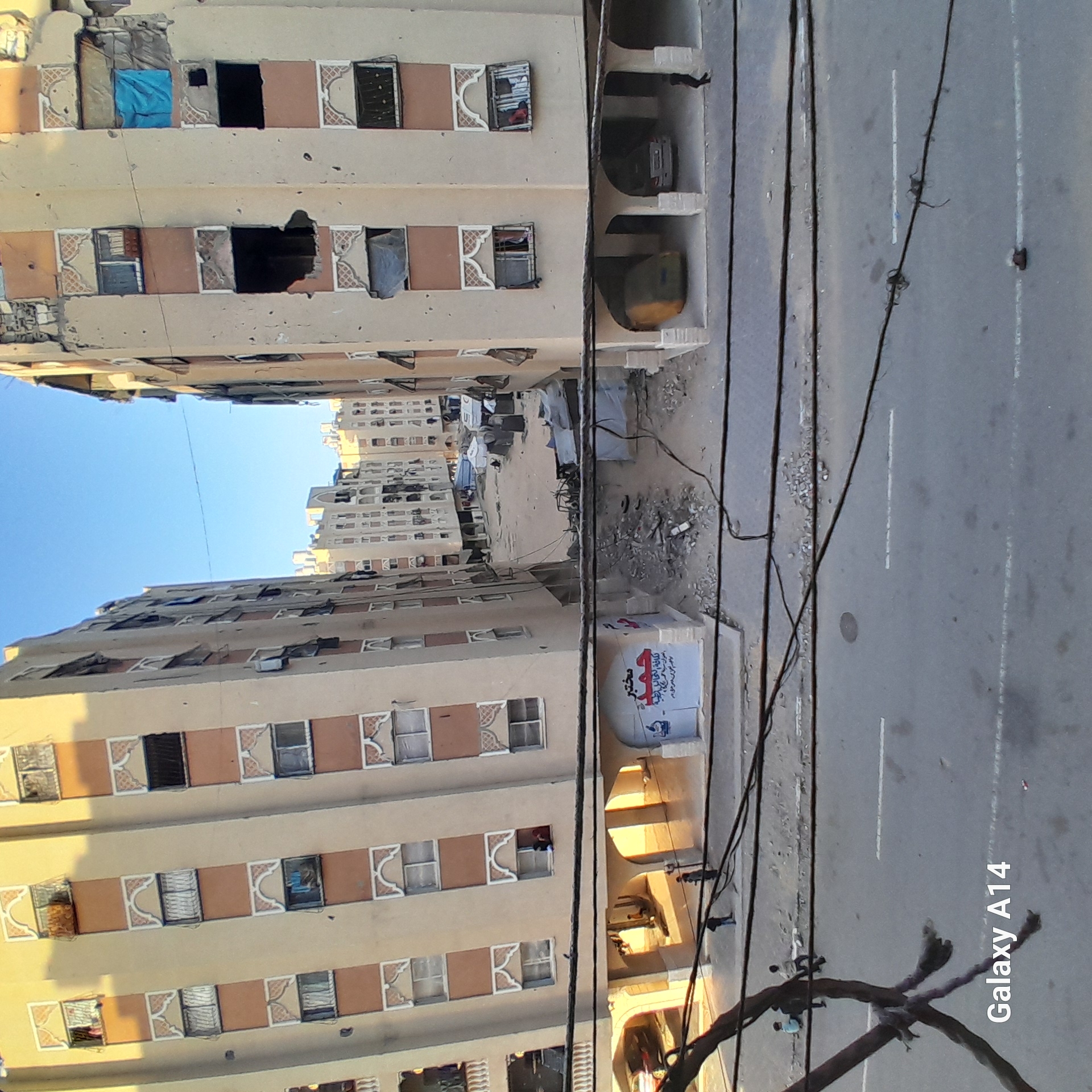
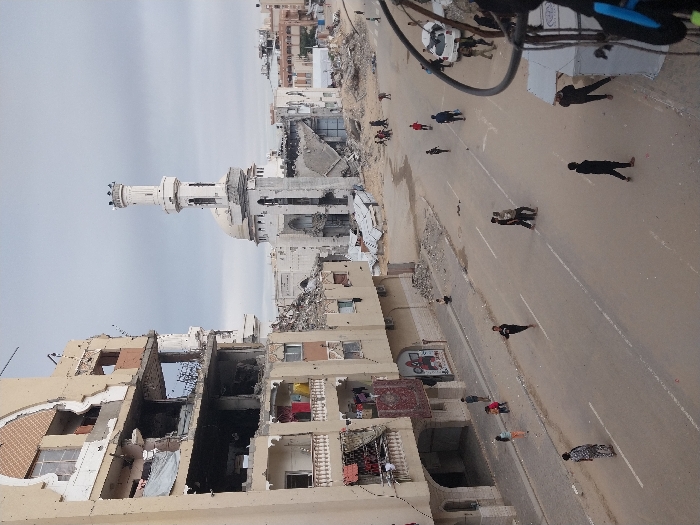
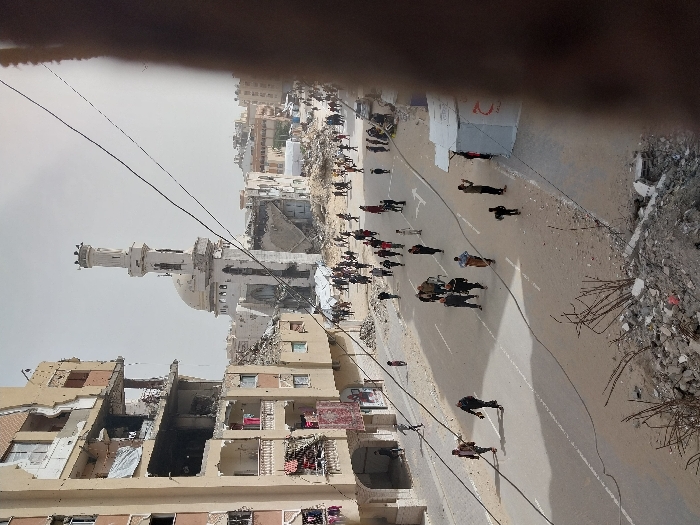
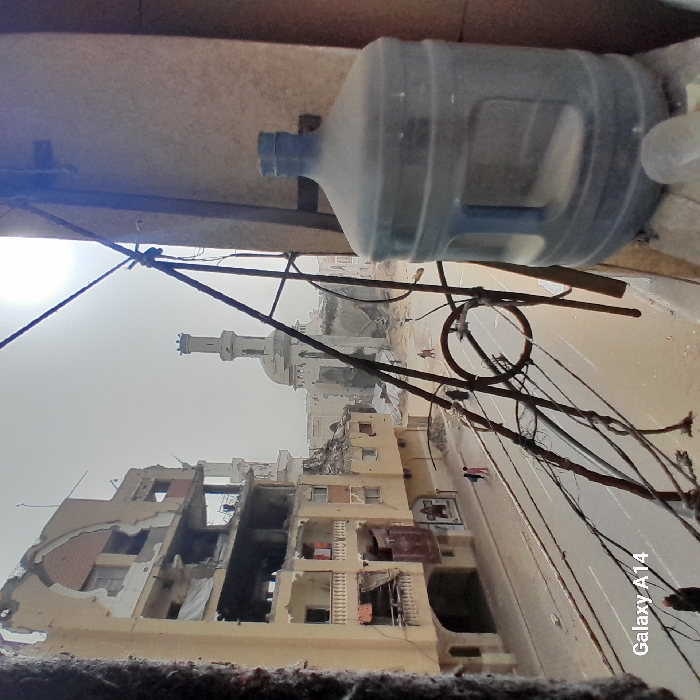
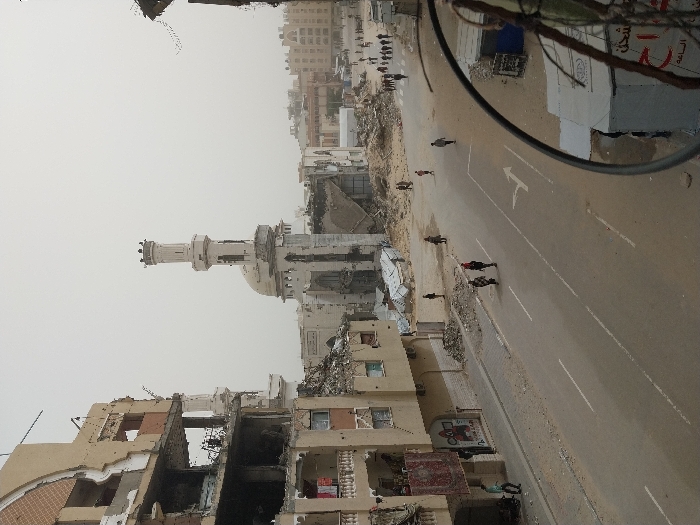
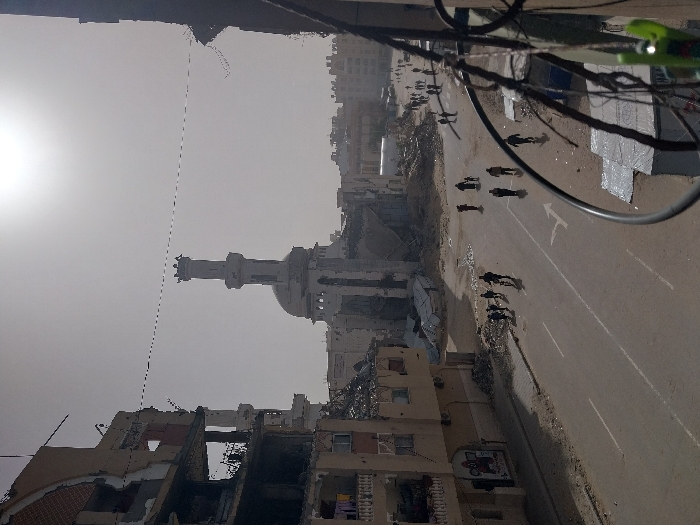
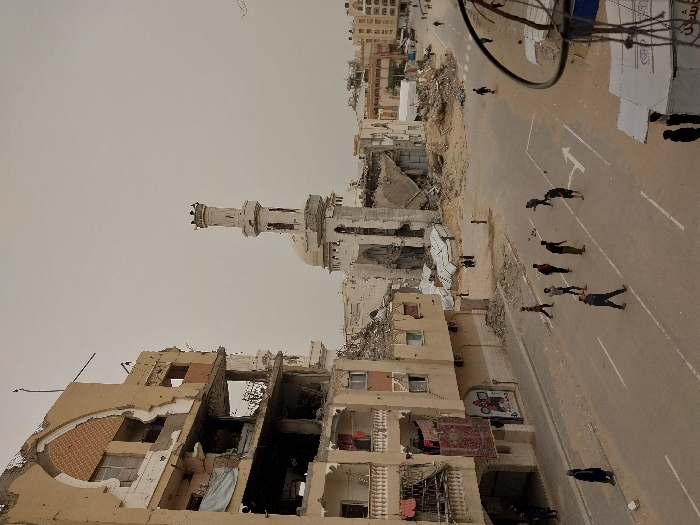
The image presents a desolate urban landscape showing extensive destruction, likely the aftermath of conflict. The scene is dominated by a wide, paved road running diagonally from the lower left to the upper right, flanked by severely damaged buildings. The sky is a uniform, pale grey, suggesting an overcast day or a dusty atmosphere, with diffused lighting that casts soft shadows.

In the mid-ground, a prominent feature is a mosque, distinguished by its tall, ornate minaret and dome, which appear largely intact despite the surrounding devastation. The base of the mosque and its immediate vicinity are littered with rubble.

On both sides of the road, multi-story buildings are in various states of disrepair. On the left side, closer to the foreground, a large building has its facade completely ripped open, exposing internal rooms, concrete slabs, and twisted rebar. Its windows are shattered, and debris is piled around its base. Further down the street, other structures show collapsed sections and piles of rubble, indicating widespread damage. In contrast, on the right side of the road, some buildings appear less damaged, though still impacted. One of these buildings has a colorful patterned rug or carpet hanging from a balcony.

A central and striking element of the image is a group of approximately seven to eight individuals lying face down or kneeling on the asphalt in the right lane of the road, in the mid-ground. They appear to be in a posture of surrender or detention, some with their hands behind their heads or backs. They are dressed in dark, casual clothing. Other isolated figures are visible throughout the scene: one person stands near the heavily damaged building on the left, another walks further down the road, and several indistinct figures are scattered in the background, near the mosque and observing the scene.

The road itself has clear white painted markings, including a right-turn arrow. Overhead, in the upper right corner, thick black cables or wires are visible, possibly remnants of electrical or communication lines. In the upper right background, near distant buildings, some white, tarp-like structures, possibly temporary shelters, can be seen.

Text in Arabic script is visible on a banner or poster attached to a building on the right side of the road. Its specific content is unclear due to distance and resolution. The overall impression conveyed by the image is one of profound destruction, human vulnerability, and the somber reality of a conflict-affected area.
reham

Feb 13, 2026, 2:21 PM

Khan Yunis, Palestinian Territory

Stake attention in this memory

Devastation
Loss
Despair
Fear
Anguish

The image presents a desolate urban landscape showing extensive destruction, likely the aftermath of conflict. The scene is dominated by a wide, paved road running diagonally from the lower left to the upper right, flanked by severely damaged buildings. The sky is a uniform, pale grey, suggesting an overcast day or a dusty atmosphere, with diffused lighting that casts soft shadows. In the mid-ground, a prominent feature is a mosque, distinguished by its tall, ornate minaret and dome, which appear largely intact despite the surrounding devastation. The base of the mosque and its immediate vicinity are littered with rubble. On both sides of the road, multi-story buildings are in various states of disrepair. On the left side, closer to the foreground, a large building has its facade completely ripped open, exposing internal rooms, concrete slabs, and twisted rebar. Its windows are shattered, and debris is piled around its base. Further down the street, other structures show collapsed sections and piles of rubble, indicating widespread damage. In contrast, on the right side of the road, some buildings appear less damaged, though still impacted. One of these buildings has a colorful patterned rug or carpet hanging from a balcony. A central and striking element of the image is a group of approximately seven to eight individuals lying face down or kneeling on the asphalt in the right lane of the road, in the mid-ground. They appear to be in a posture of surrender or detention, some with their hands behind their heads or backs. They are dressed in dark, casual clothing. Other isolated figures are visible throughout the scene: one person stands near the heavily damaged building on the left, another walks further down the road, and several indistinct figures are scattered in the background, near the mosque and observing the scene. The road itself has clear white painted markings, including a right-turn arrow. Overhead, in the upper right corner, thick black cables or wires are visible, possibly remnants of electrical or communication lines. In the upper right background, near distant buildings, some white, tarp-like structures, possibly temporary shelters, can be seen. Text in Arabic script is visible on a banner or poster attached to a building on the right side of the road. Its specific content is unclear due to distance and resolution. The overall impression conveyed by the image is one of profound destruction, human vulnerability, and the somber reality of a conflict-affected area.

Loading AttnAds…

transactions
revenues
stakers
Earliest
Latest
Highest stake

No transactions found

More from this user

More from Khan Yunis

reham

Feb 13, 2026, 2:21 PM

Khan Yunis, Palestinian Territory

Licensed under Creative Commons Attribution 4.0 International License. You are free to share and adapt this content with proper attribution.